Quality risks from manual revision reviews
When requirements documents for nuclear power plant equipment are revised, engineering and quality teams need to identify and assess changes from previous versions. Traditionally, this process relied on manual comparison using Excel and Word, increasing the risk of missed changes and inconsistent reviews.
The repetitive work also required significant involvement from experienced personnel, while review results remained scattered across individual files. This made it difficult to track revision history, reuse previous reviews, and retain knowledge across the organization.
Automating document parsing and change detection
We implemented an AI-powered system that combines Vision AI, document parsers, and LLMs to automate document parsing and revision comparison.
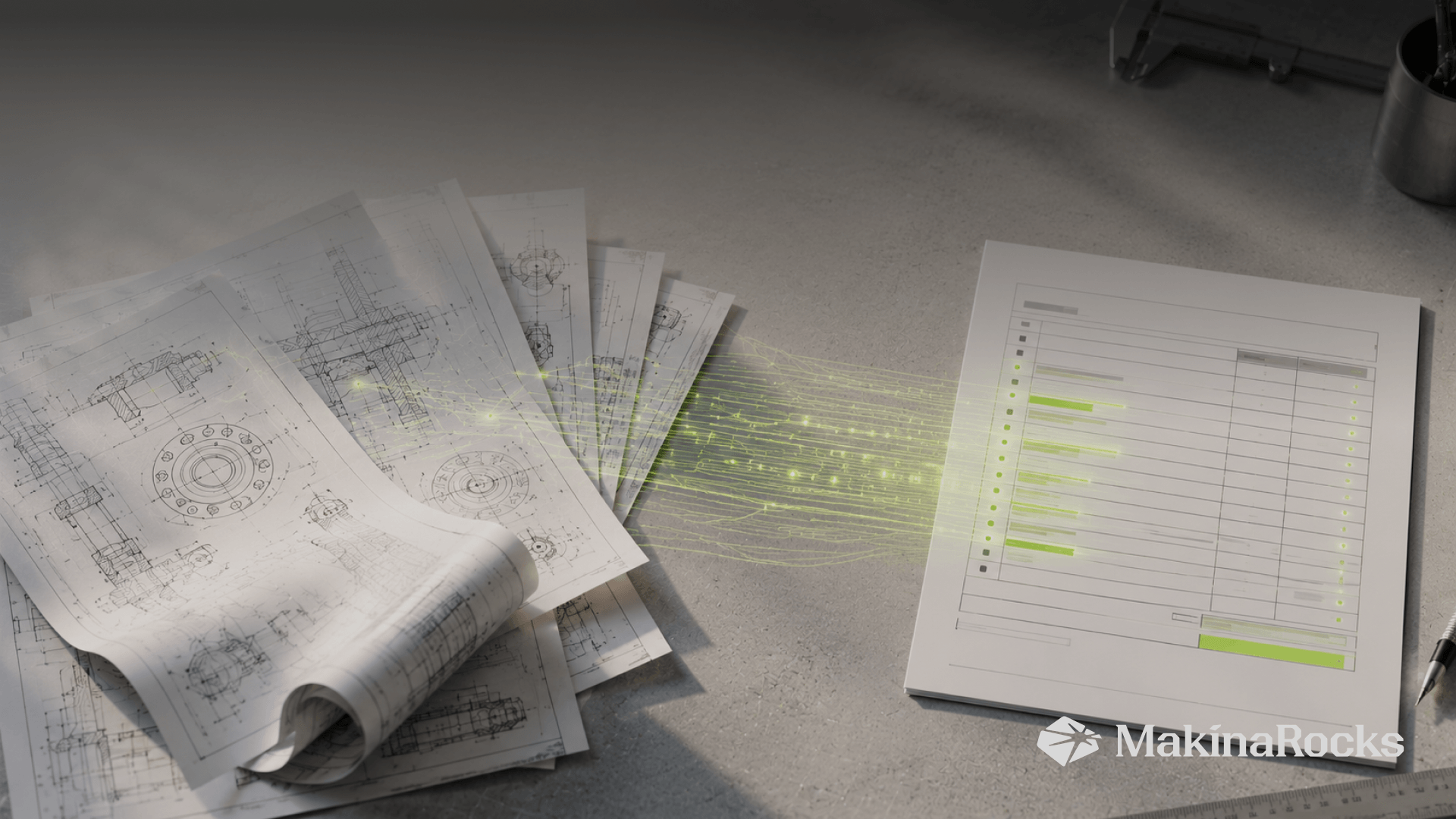
The system extracts information from unstructured requirements documents using vision-language models (VLMs) and converts it into structured data. The extracted content is then standardized, converted into vector embeddings, and stored in a vector database. By comparing structured information across document versions, the system identifies specific changes for further review.
Improving review consistency and document traceability
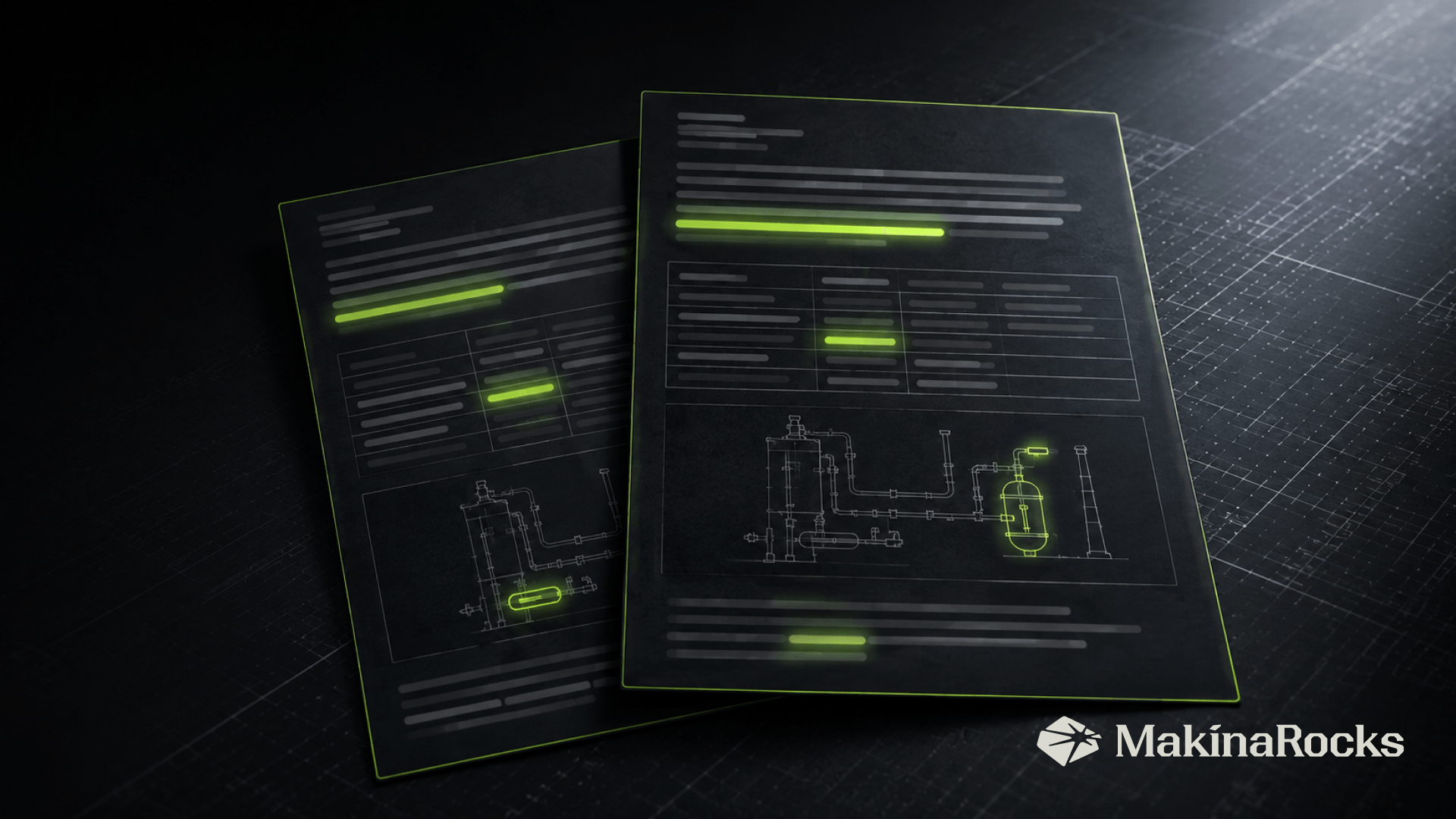
Detected changes are automatically organized in a structured table, helping reviewers focus on relevant revisions while reducing the risk of missed changes. Standardized review criteria and automated filtering of significant changes also allow experienced personnel to focus on items that require closer assessment.
Review results are stored as structured data, improving revision traceability and making previous reviews easier to retrieve and reuse. This creates a reusable knowledge base that can also support future LLM-based applications.