MIT’s GenAI Divide: State of AI in Business 2025 reaches a stark conclusion: despite $30–40 billion in global investment, 95% of companies have generated no meaningful results from Generative AI. Only 5% have achieved measurable business outcomes.
MIT calls this gap the GenAI Divide. The more useful question is not why most companies struggled. It is why a small minority succeeded. The report identifies three common patterns among high-performing organizations. Combined with what we have seen firsthand across enterprise deployments at MakinaRocks, they form a practical blueprint for AI that works in production.
1. Buy vs. build: Why AI changes the equation
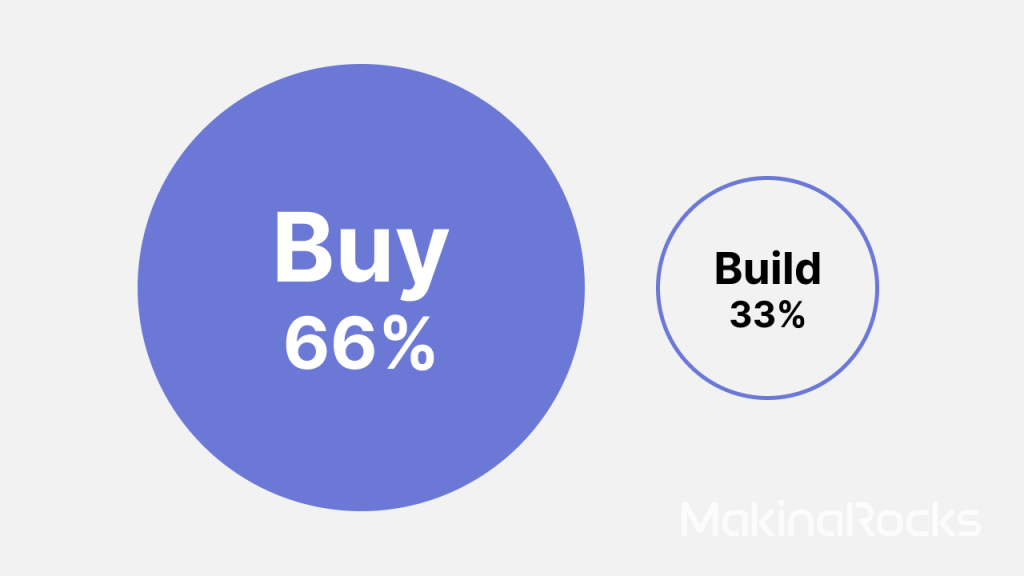
Every enterprise faces the classic Make-or-Buy decision when adopting new technology. For AI, this choice carries unusually high stakes.
AI isn’t simply a software purchase. It’s a complex ecosystem where data pipelines, infrastructure, model operations, and domain expertise must all work in concert. A gap in any one of these doesn’t just slow progress — it can stall an initiative indefinitely.
MIT makes the case clearly: companies that partner with specialized AI experts significantly outperform those that build in-house, and the gap is most visible in two areas that actually matter — full deployment rates and employee adoption.
The core reason internal builds stall isn’t ambition or budget. It’s a lack of production experience. There’s a meaningful difference between developing AI in a controlled research environment and building AI that frontline workers find genuinely useful. Most internal efforts collide with what the industry calls the Pilot-to-Production Chasm — promising experiments that never graduate into operational systems.
Bridging that chasm requires a structured co-development model where enterprise and AI specialist play complementary roles. The enterprise defines the problem and contributes irreplaceable domain knowledge. The AI partner translates that operational complexity into machine-learnable systems, taking ownership of the modeling and engineering required to reach production grade.
At MakinaRocks, we’ve found that this co-development advantage is built on five specific types of accumulated execution experience:
- Field-tested reliability — Building AI that performs under real-world conditions, not just clean, curated data.
- Multi-problem proficiency — The ability to solve diverse problem types across different workflows within a single domain.
- Operational scalability — Proven experience deploying, reproducing, and scaling models reliably across multiple sites.
- Tacit knowledge translation — The architectural expertise to convert complex domain knowledge into structured, learnable AI systems.
- Continuous feedback integration — A systematic approach to iterating and improving AI based on ongoing user input.
MIT’s findings are unambiguous: companies that leverage external expertise achieve far higher rates of full-scale deployment. And crucially, those that build continuous feedback loops into the co-development structure don’t just deploy AI — they compound its value over time.
2. Give ownership to the frontline, not just the center
Many organizations still treat AI adoption as a mandate handed down from a central innovation team. MIT’s data suggests the opposite approach works better.
Companies that give frontline managers and operational teams genuine ownership over AI initiatives achieve faster adoption and higher usage than those running top-down programs. The reason is straightforward: frontline teams know where the actual bottlenecks are, which workflows waste time, what decisions need support, and — critically — which AI outputs are actually useful versus which ones sound impressive in a demo.
These teams also tend to treat AI partners differently. Rather than managing them as software vendors, effective frontline teams engage AI specialists as genuine business transformation partners — iterating, failing, and improving together. Notably, MIT observed that power users already comfortable with consumer-grade AI tools often led this shift.
We’re seeing this change directly in the organizations we work with. AI initiatives are increasingly being driven bottom-up — engineers, planners, and operators identifying their own high-value use cases rather than waiting for a mandate from above. Even in top-down programs, we’re seeing more proactive participation from operational staff who’ve already experienced what AI can do and want to apply it to their own workflows.
This matters beyond adoption metrics. Active frontline participation is what makes co-development feedback loops actually function. When real users engage with AI systems, suggest improvements, and integrate outputs into daily work, AI stops being a separate tool and starts becoming part of how the organization operates.
For companies without internal AI teams to coordinate this, Forward-Deployed Engineers (FDEs) from specialized AI firms are filling an increasingly important role — working directly within client environments to bridge the gap between AI capability and operational reality.
3. AI that gets smarter over time
MIT identifies the core technical reason most AI projects fail in straightforward terms.
“The core barrier to scaling is not infrastructure, regulation, or talent. It is learning. Most GenAI systems do not retain feedback, adapt to context, or improve over time.”
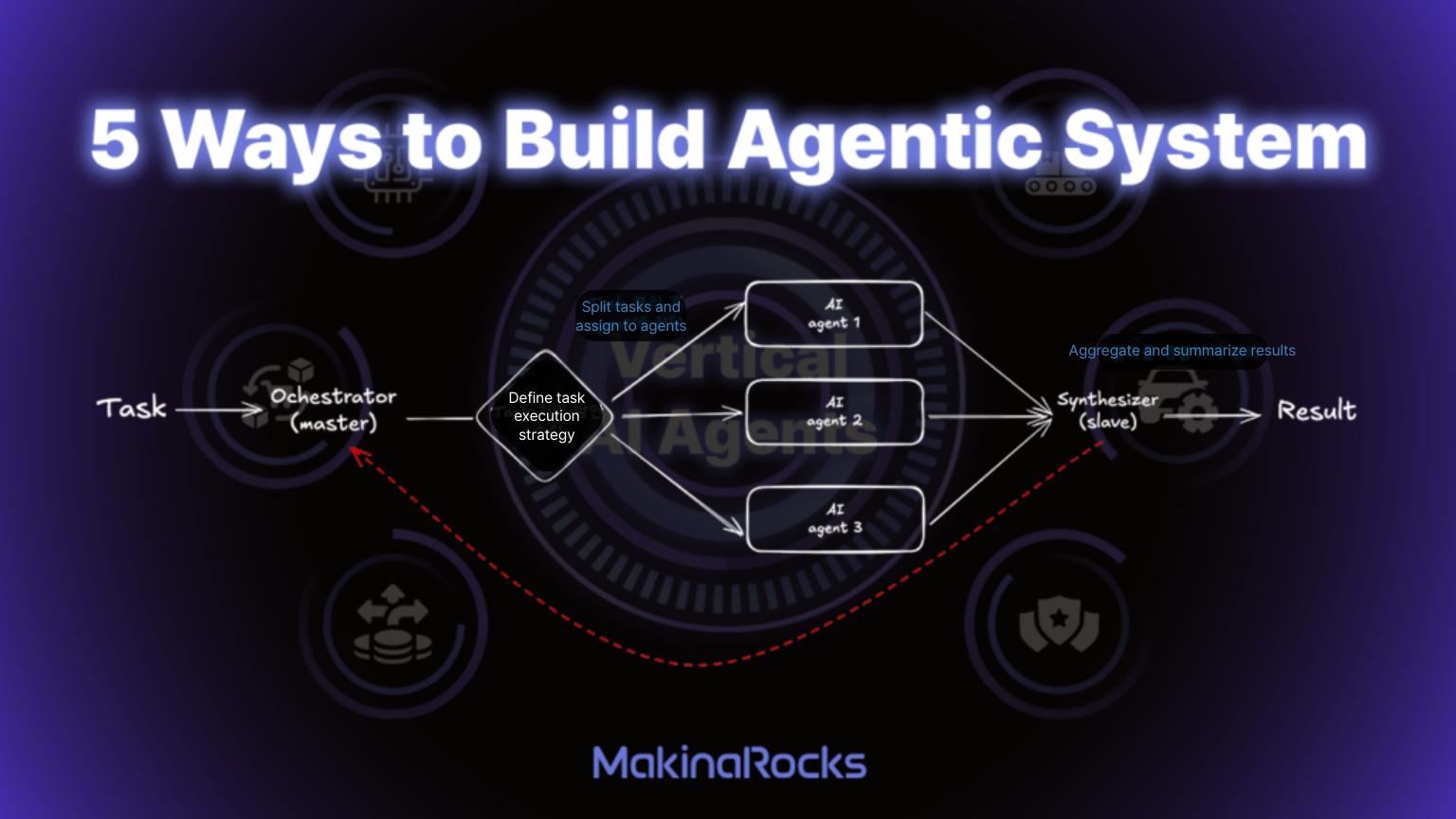
This is the precise problem that Agentic AI is designed to solve. Agentic AI isn’t a single model. It’s a coordinated system of specialized AI agents that collaborate to complete complex work. These systems share memory and context, delegate tasks through orchestration agents, and incorporate feedback from their environment over time. They observe. They adapt. They improve. This architecture directly addresses the root cause MIT identified: static AI that performs well in controlled conditions but fails to remain useful as business contexts evolve.
Agentic AI use cases in the real world
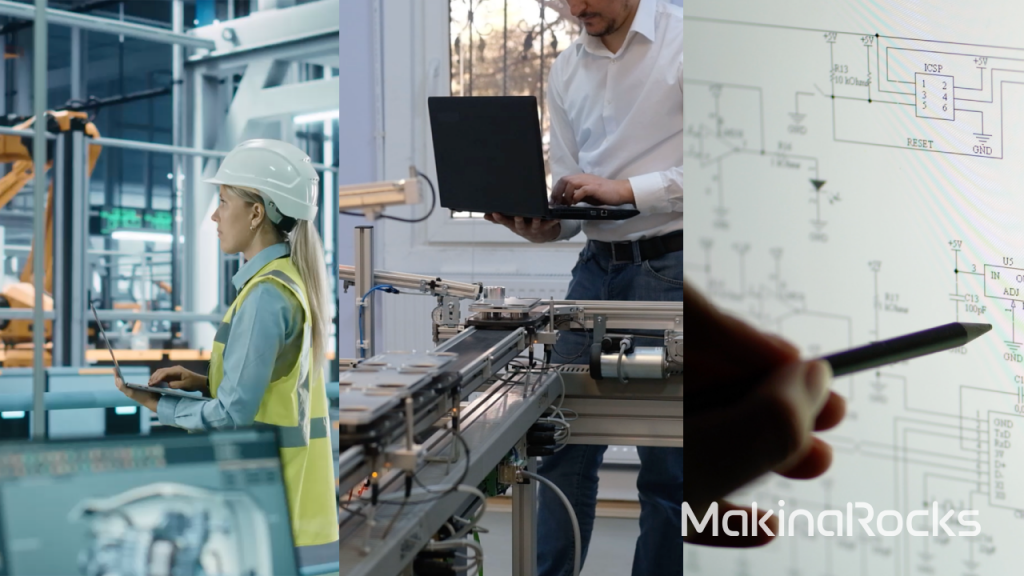
At MakinaRocks, we design what we call Adaptive Learning Agentic AI systems — built to continuously incorporate new data and operational feedback as part of normal operation, not as a periodic update process. A few examples from our deployments:
- 🔗 Digital factory operations agentic AI: Multi-agent systems that retrieve information, generate code, detect anomalies, and execute operational responses in real time.
- 🔗 PLC coding agentic AI: Natural-language AI that analyzes, validates, and generates PLC programs, improving engineering efficiency while preserving institutional know-how.
- 🔗 Drawing review agentic AI: AI that compares engineering drawings, identifies design changes, and interprets the significance of those differences to accelerate review cycles.
Critically, these systems are embedded within existing workflows. AI that sits outside daily operations gets ignored — no matter how capable it is. The goal is always integration, not installation.
MIT also points to the next horizon: the Agentic Web — a network of autonomous systems that discover, negotiate, and coordinate with one another across internet infrastructure. Not isolated AI tools, but intelligent ecosystems that redesign business processes end to end.
Beyond the 5%
The pattern MIT identifies is clear and consistent. Successful organizations share a recognizable set of characteristics: they partner with experienced AI specialists rather than building generic tools internally; they empower frontline users; they integrate AI deeply into existing workflows; they build systems that continuously learn; and they focus on domain-specific, high-value use cases. Meanwhile, organizations that struggle do the opposite — building generic tools internally, chasing demos without follow-through, and implementing once without ongoing improvement.
What MakinaRocks observes on the ground reinforces this. More enterprises are choosing to partner rather than build. More engagements are driven by hands-on practitioners. And the shift toward Agentic AI as the primary implementation approach is accelerating. We’ve also found two additional traits among successful organizations: a focus on narrow but high-value use cases grounded in domain expertise, and scalable systems that deploy reliably across multiple processes — over perfect performance from a single model.
Since 2017, MakinaRocks has helped enterprises across manufacturing, automotive, semiconductors, batteries, chemicals, defense, public sector, and retail move from pilot to production — and keep AI performing over time through our platform, Runway. Our 🔗industry use cases show what that looks like in practice. If you’re wondering whether your organization can move from the 95% to the 5% — let’s find that answer together.
Note: This post was translated from the original Korean version by Kyoungyeon Kim.